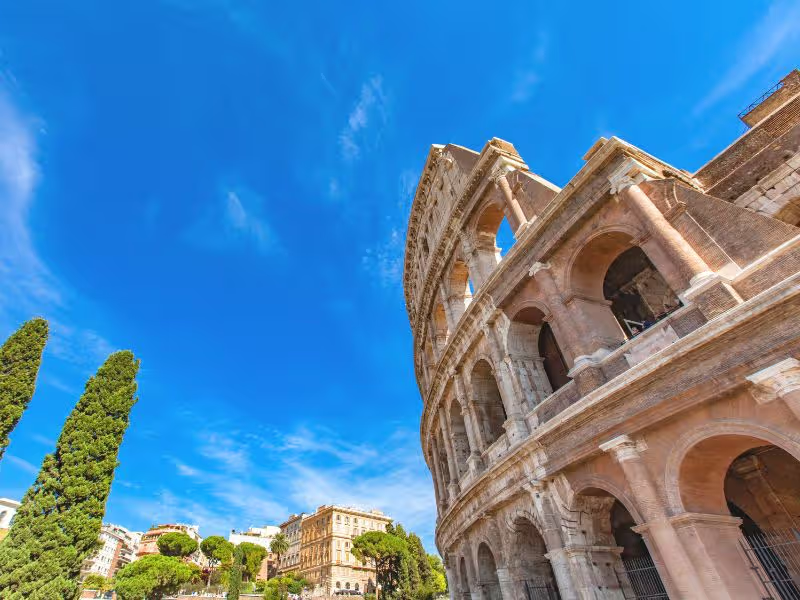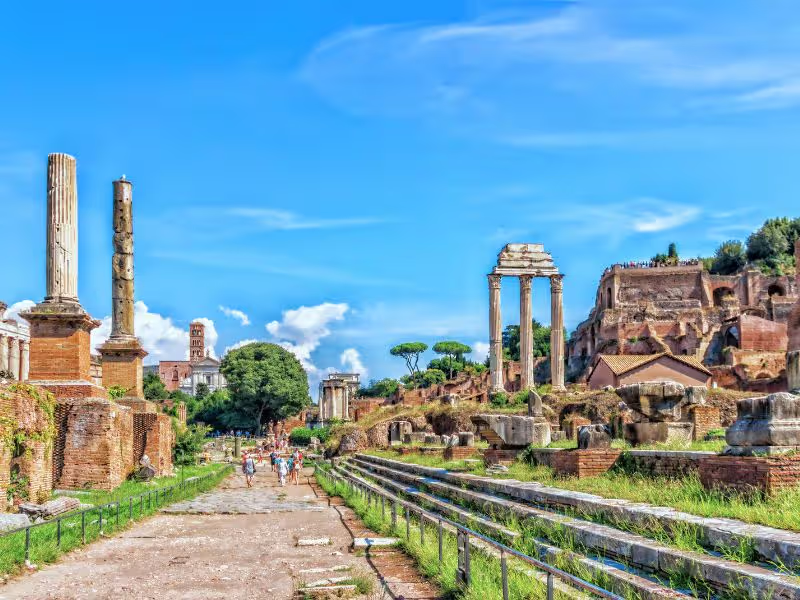
The Roman Forum

What is the Roman Forum?

The Roman Forum, or Forum Romanum in Latin, served as the epicenter of public life in Ancient Rome. Throughout the Roman Republic and well into the Imperial Period, it was the nucleus of Roman civilization, hosting political deliberations, public speeches, criminal trials, and commercial affairs.

    • Iron Age Beginnings: Archaeological evidence traces the area's significance back to the Iron Age (11th century BCE).
    • Republic to Empire: Its prominence rose in importance from the 7th century BCE, seeing major developments as Rome transitioned from the Republic to the Empire.
    • Imperial Expansion: Under leadership spanning from Julius Caesar to Augustus, and beyond, the Forum expanded, reflecting Rome's growing empire.

Roman Forum's architecture and landmarks

Temples and Religious Structures

Among the forum's most revered religious edifices stood the Temple of Castor and Pollux, whose remains symbolize the importance of myth and legend in Roman culture. The Temple of Saturn, storing the State treasury, was both a financial center and a platform for venerating the god of wealth. The Temple of Vesta held significance for the eternal flame guarded by the Vestal Virgins, connecting the realm of family and religious duties.

Civic and Political Buildings

The Curia, serving as the Senate House, embodied the political heartbeat of ancient Rome where critical decisions shaping the empire were made. Structures like the Basilica Julia and Basilica Aemilia were multifunctional buildings used for business dealings, legal proceedings, and public meetings. The Curia Julia, initiated by Julius Caesar and completed by Augustus, hosted Senate gatherings and stands as an emblem of Roman political life.

Monuments and Commemorative Features

Tributes to triumphs and historical milestones, such as the Arch of Titus, celebrated victories and the might of emperors. Commemorative structures like the Column of Phocas and Milliarium Aureum marked symbolically significant spots within the forum. The Rostra served as the grandstand for orators addressing the crowds, adorned with the prows of ships to commemorate naval victories.

Available Tickets

Colosseum, Roman Forum and Palatine Hill priority entrance tickets
  • Priority access to the Colosseum
  • Single entrance for Roman Forum & Palatine hill
  • Optional audio guide (Chinese, English, French, German, Italian and Spanish)
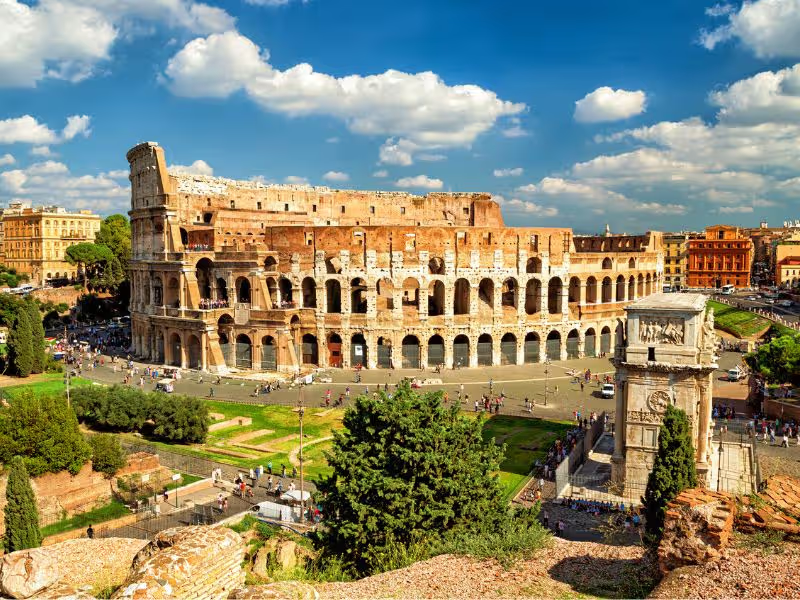
★★★★☆ 4.1 (27.0k+ reviews) · Headout
Colosseum, Roman Forum and Palatine Hill last-minute priority entrance tickets
  • Priority access to the Colosseum
  • Single entrance for Roman Forum & Palatine hill
  • Optional audio guide (Chinese, English, French, German, Italian and Spanish)
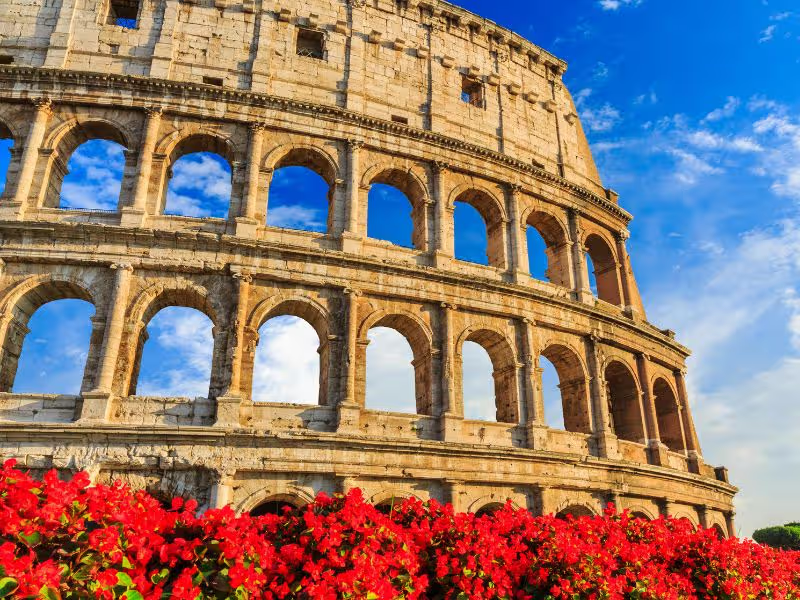
★★★★½ 4.7 (1.0k+ reviews) · Tiqets
Colosseum, Roman Forum & Palatine Hill plus multimedia experience tickets
  • Priority access to the Colosseum
  • Single entrance for Roman Forum & Palatine hill
  • Free city map and multimedia video on ancient Rome
★★★★☆ 4.3 (500+ reviews) · Tiqets

Cultural and sociopolitical significance of the Roman Forum
Public life and governance

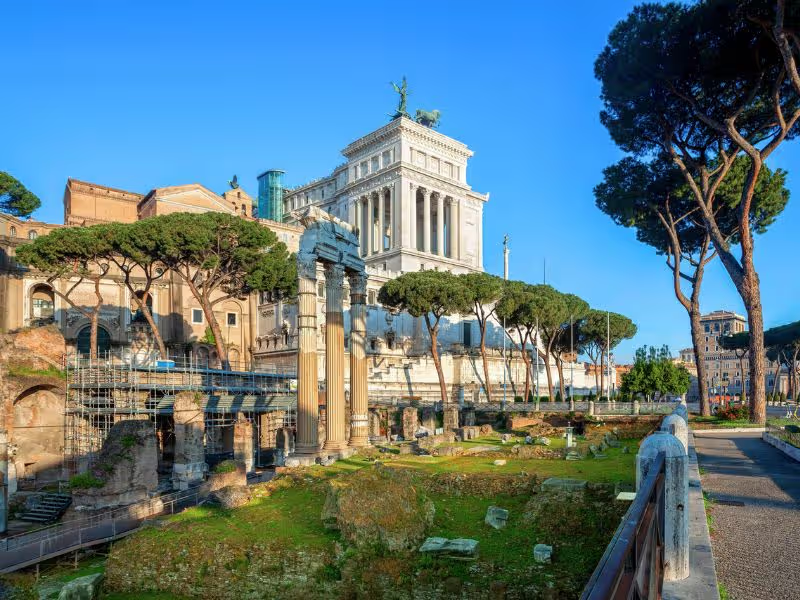
The Roman Forum was the epicenter of Roman public life, especially during the Republic and the Imperial Period. It was where the Roman Senate convened, a place for public speeches, elections, and the administration of justice. Legal matters were adjudicated within the law courts, notably in the Basilica Julia and the Basilica Aemilia, platforms for legal and business transactions. Not only were key political discussions held here, but the Forum was also a canvas showcasing victories and power, with monuments like the Arch of Septimius Severus commemorating military triumphs.

Structures like the Temple of Vespasian and the Tabularium overlook the Capitoline Hills, symbolizing the intersection of divine reverence and state affairs. The presence of shops and the paving of the area reflect the economic and functional aspects of this space. Key political entities, including esteemed figures like Cicero, navigated this complex tapestry of Roman society, contributing to both the political discourse and the cultural narrative.

Preservation, restoration and excavations

Despite suffering from fires, earthquakes, and neglect, especially during the Middle Ages when it was referred to as the Campo Vaccino, the site's preservation and restoration has been an ongoing process since the early 19th century. Notably, Carlo Fea initiated systematic excavations in 1803, which aimed to preserve and restore its grandeur. Significant excavations have also revealed layers of history including the Lacus Curtius, possibly a shrine buried under the Roman Forum, which bears witness to Rome's deep past.

Excavation and conservation efforts continue to restore structures such as the Temple of Vespasian and Titus, bringing to light practices linked to the leadership of emperors like Constantine who contributed to the Forum's reconstructions using concrete and other durable materials. These excavations are pivotal in understanding the social and political nuances of the Roman Senate, the office of phocas, and the sacred order of the Vestal Virgins, who were integral to the religious and judicial life in Augustan Rome. The Forum's remnants are crucial in piecing together the societal framework from the times of the Republic to the foundational narratives of the Imperial Fora.

FAQs and tips

What was the Roman Forum used for?

The Roman Forum served as the political and ceremonial center of ancient Rome. Here, elections were held, public speeches delivered, and triumphal processions celebrated.

Why is the Roman Forum important?

The Roman Forum is crucial as it represents the epicenter of Roman civilization and governance. It housed vital temples, law courts, and the Senate House, shaping the fate of the ancient city.

Where is the Roman Forum located?

The Roman Forum lies in the valley between the Palatine and Capitoline Hills in Rome.

How long does it take to walk the Roman Forum?

Exploring the entire Roman Forum typically takes approximately 1 to 2 hours, depending on the pace.

How did the Roman Forum get destroyed?

Following the fall of the Roman Empire, the Forum suffered from neglect, and over time, earthquakes, weathering, and stone pilfering contributed to its ruin.

Should I visit the Roman Forum?

Yes, the Roman Forum is worth visiting for its archaeological significance and the ability to walk through history first-hand, with remnants of ancient Rome stretching back to the 7th century BC.