
The Palatine Hill
Where is the Palatine Hill located?
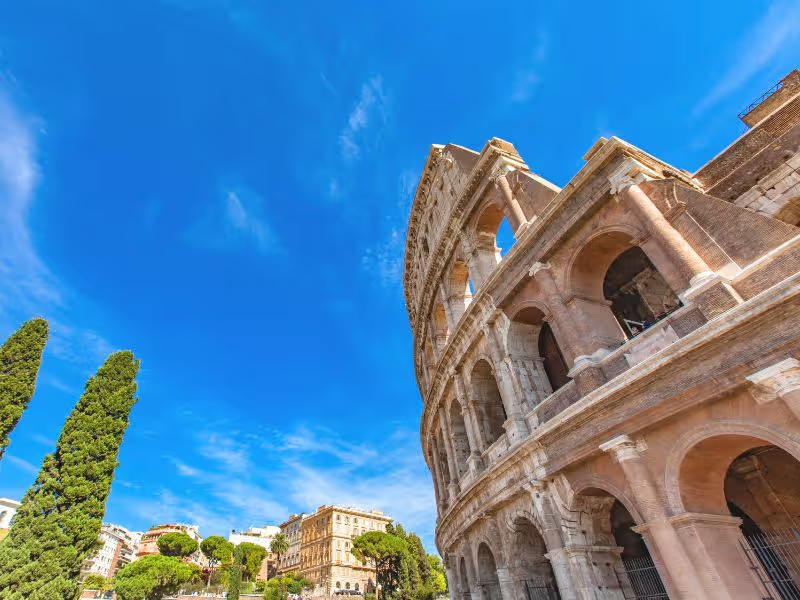
Palatine Hill is impressively situated just a short walk from the Colosseum and the Roman Forum, allowing visitors to easily combine tours of these iconic sites. The distance ensures that individuals can immerse themselves in the grandeur of classical Rome, transitioning seamlessly from the gladiatorial arena to the political epicenter and high society of ancient Rome, all within a few hours.
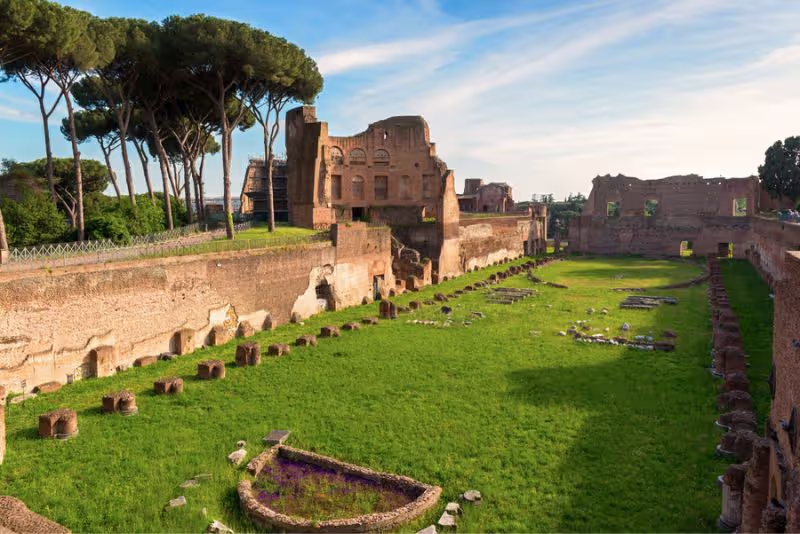
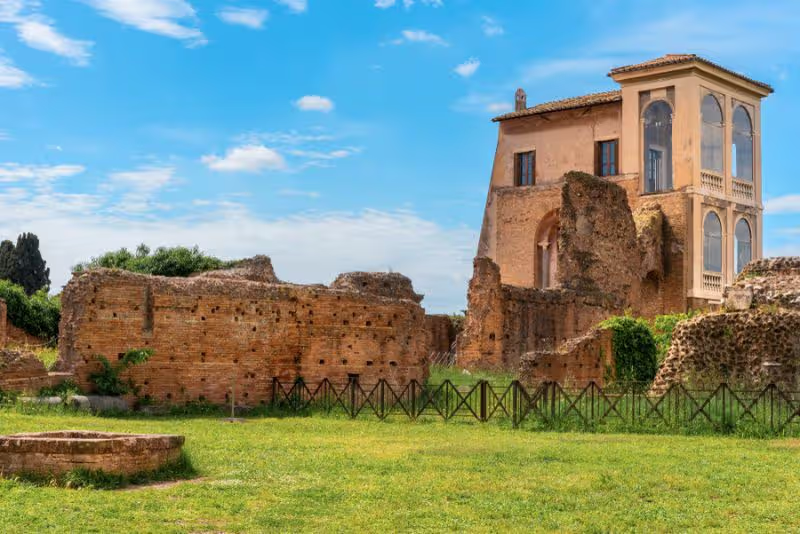
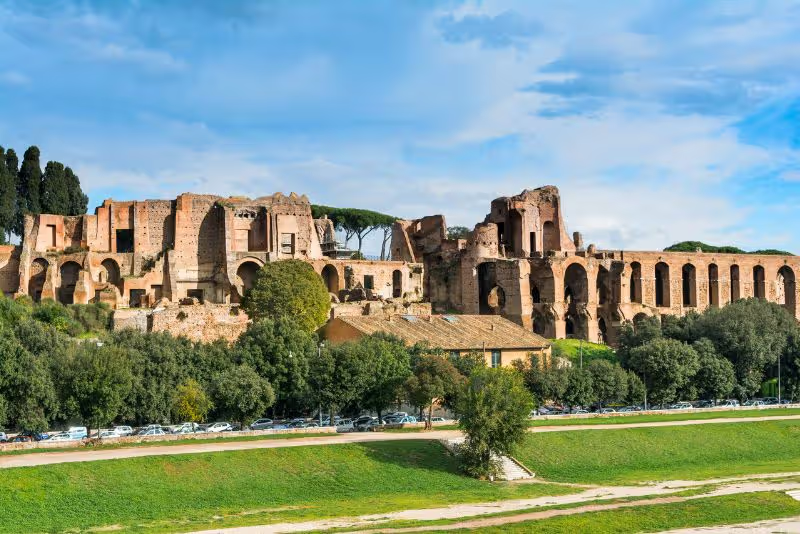
The Palatine Hill is not only Rome's central-most hill, but it is also steeped in history, housing some of the most significant architectural feats from ancient Rome. This section focuses on the principal monuments and structures that stand out for their historical and architectural value.
What will I see in Palatine Hill?
Available Tickets
- Priority access to the Colosseum
- Single entrance for Roman Forum & Palatine hill
- Optional audio guide (Chinese, English, French, German, Italian and Spanish)
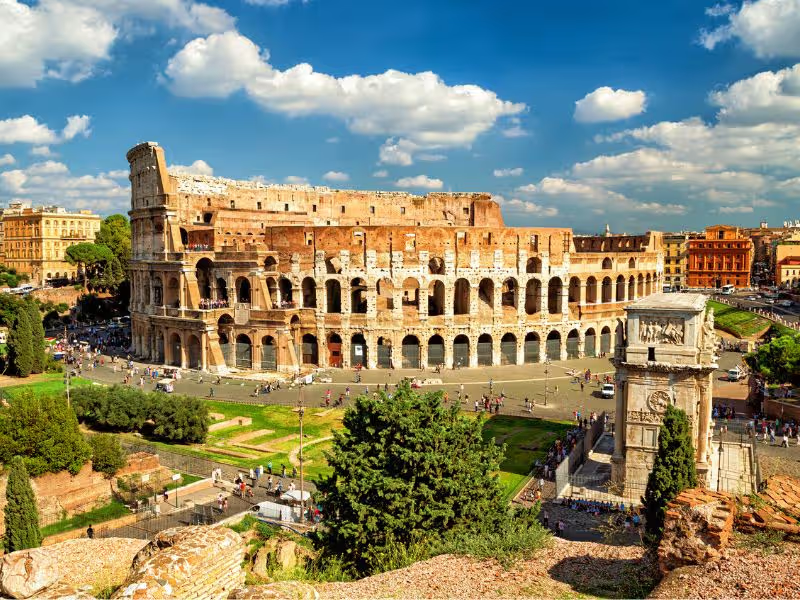
- Priority access to the Colosseum
- Single entrance for Roman Forum & Palatine hill
- Optional audio guide (Chinese, English, French, German, Italian and Spanish)
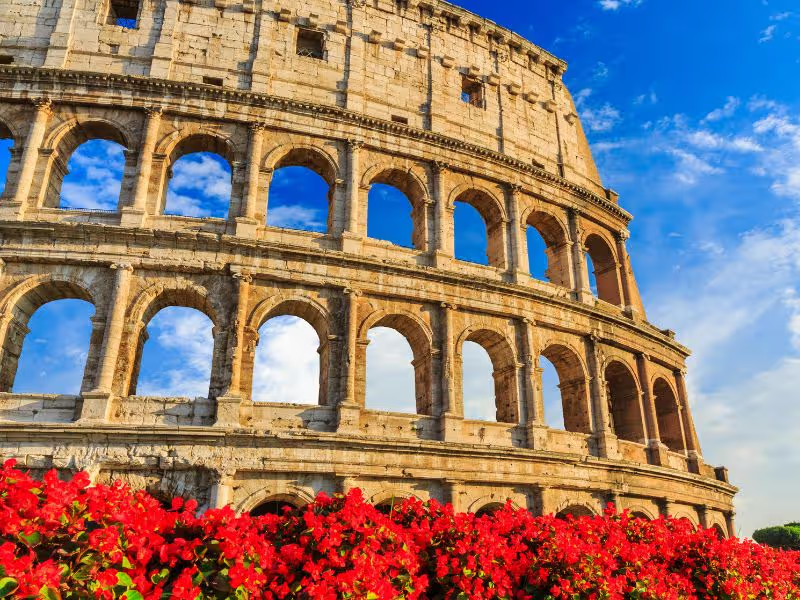
- Priority access to the Colosseum
- Single entrance for Roman Forum & Palatine hill
- Free city map and multimedia video on ancient Rome
Historical significance of Palatine Hill
Palatine Hill stands as a testament to the layered history of Rome, encompassing myth, power, and the rise of a civilization. It is central to the narrative of Ancient Rome, both as a physical location and a symbolic platform for Rome's foundational and imperial epochs.
Palatine Hill is steeped in Roman mythology, particularly as the birthplace of Rome's foundation legend. According to tradition, it is here that the twins Romulus and Remus, having been rescued by a she-wolf, decided to establish the city of Rome. This tale situates the Palatine at the very heart of the city's legendary inception, which is not only a powerful narrative of origin but also a critical cornerstone of ancient Roman cultural identity.
The significance of the Palatine extends beyond legend. It was a desirable location for the affluent during the Republic and later housed the palaces of emperors in the Roman Empire, signaling its enduring status. The ruins on the hill today provide a direct connection to the city’s past, with structures that reflect the grandeur and power of Rome’s byzantine political and social systems. From imposing palatial complexes, such as the Flavian Palace, to the remains of august temples, the Palatine's archeological sites offer insight into both the public and private aspects of ancient Roman life.
With its elevated position, the Palatine Hill overlooks the Roman Forum, an area that once pulsed with the commercial, religious, and political activities of Ancient Rome. Its proximity to where the Senate convened and laws were passed emphasizes the intertwined narrative of Rome's ideological and administrative evolution.
The Palatine Hill is not only the geographic nucleus of the city but also a symbolic epicenter. It represents the accumulated history of Rome, from Roman mythology's seminiferous twins to the pinnacle of an empire that influenced Western civilization profoundly.
Palatine Hill archaeological discoveries


FAQs and tips
What types of buildings are there on Palatine Hill?
On Palatine Hill, visitors can explore a range of ancient Roman buildings, from the grand imperial palaces to the remains of luxurious houses and temples.
How can I get tickets for the Palatine Hill?
Tickets to Palatine Hill can be purchased online or at the entrance. A combined ticket is available that also grants access to the Colosseum and Roman Forum.
What's the history of Palatine Hill?
Palatine Hill is steeped in history, known as the place where Rome was founded and the home to Rome's emperors and aristocracy during the Empire.
Are there any important facts about Palatine Hill that I should know?
Noteworthy is the Hill's status as the centremost of the Seven Hills of Rome and its purported location of the Lupercal, the cave where Romulus and Remus were said to have been nurtured by the she-wolf.
What makes Palatine Hill a must-see attraction in Rome?
Palatine Hill is a must-see for its rich archaeological significance and breathtaking views of the Roman Forum and the city.
How does Palatine Hill differ from the Roman Forum?
While Palatine Hill was primarily a residential and ceremonial area for Rome's elite, the Roman Forum served as the center of daily life in Ancient Rome, with temples, markets, and public buildings.