Gladiator School& Shows in Rome

Founding of Gladiator Schools

The inception of gladiator schools, known as ludi gladiatorii, can be traced back to the 1st century AD, a period that marked the zenith of the Roman Empire's power and knowledge. The most renowned of these was the Ludus Magnus, established by Emperor Domitian, a ruler synonymous with the might and influence of Imperial Rome. Positioned adjacent to the Colosseum to facilitate direct access via underground tunnels, it underscored Domitian’s intent to bolster Rome's martial spirit.

The Colosseum and Gladiator Games
Staging and organization of Gladiator games

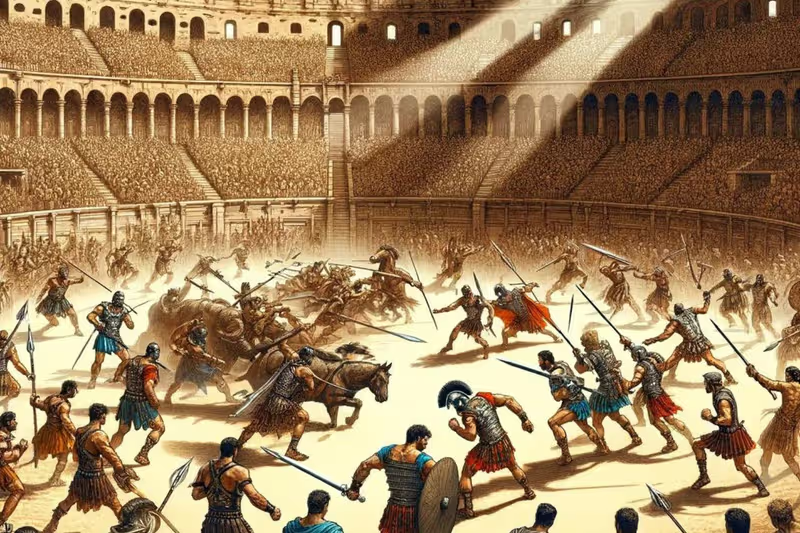
Gladiator games involved meticulous planning and organization, with different classes of gladiators engaged in combat according to specific rules and schedules. These events often began with elaborate parades and could last for several days, featuring a variety of matchups. Emperors and elite sponsors would organize these games to gain public favor or celebrate significant occasions. The coordination of such events was a massive undertaking, emphasizing the sport’s importance in Roman society.

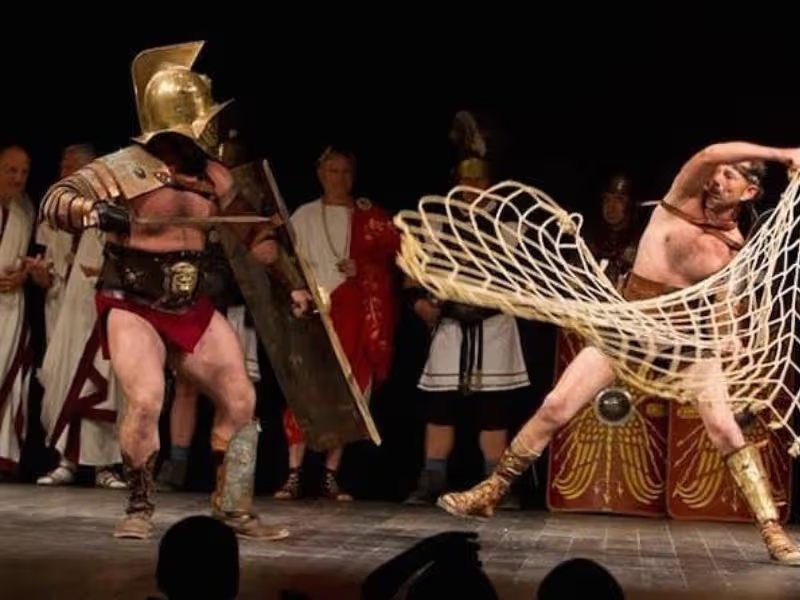
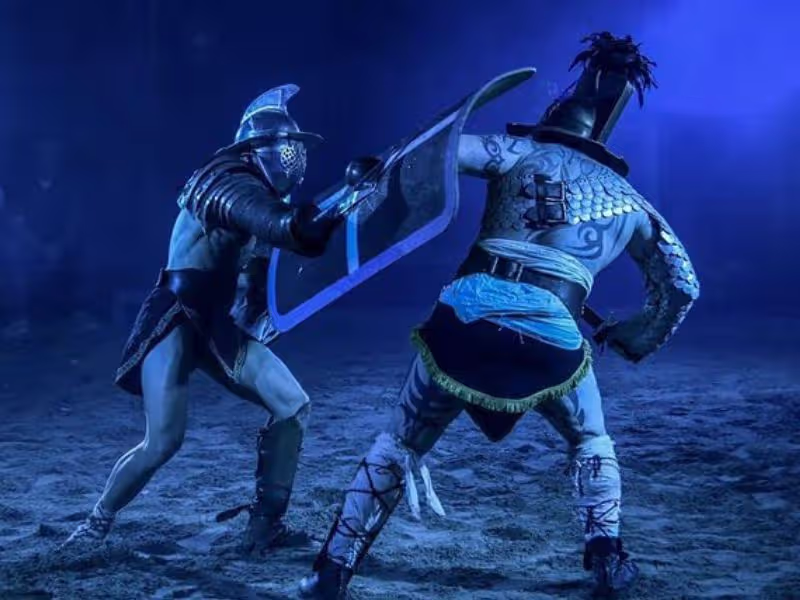
  • Types of Gladiators: There were various gladiator types, such as the heavily armed murmillo, the nimble retiarius, and the secutor, each with distinctive weapons and armor.
  • Pairings: Combatants were typically paired based on their fighting style to ensure an even and exciting match.
  • Schedule: Games could be part of festivals like the Ludi Romani or held to commemorate military victories and other important state events.

Role of the Colosseum in Gladiator games

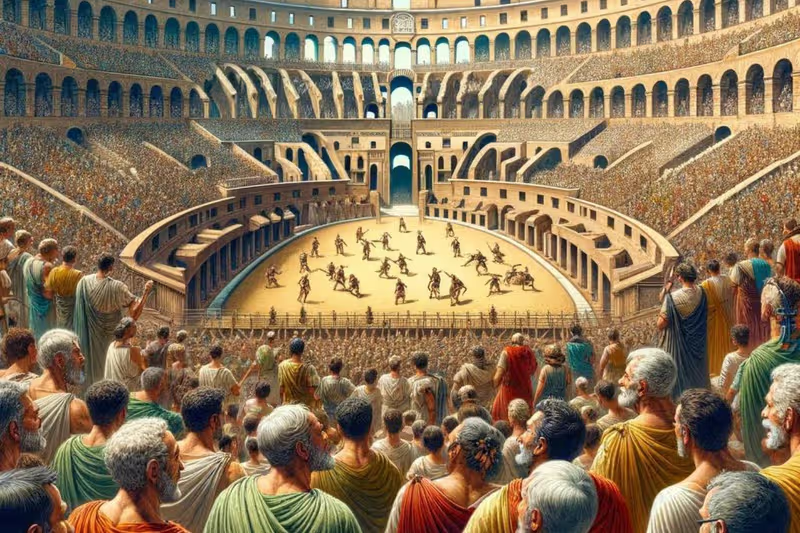
The Colosseum served as a central hub for these brutal sports, encapsulating the might and architectural ingenuity of the Roman Empire. With its four levels of seating, the amphitheater could accommodate an estimated 50,000 to 80,000 spectators. The arena floor was the focal point of the Colosseum, where the life-and-death struggles unfolded. This remarkable structure not only showcased gladiatorial combat but also served as a testament to the Roman’s prowess in engineering and societal organization.

  • Seating Arrangement: Spectators were seated according to social status, with the best seats reserved for the Roman elite.
  • Velarium: A vast canopy known as the velarium provided shade and protection from the sun.
  • Hypogeum: Below the arena, a complex network of tunnels and chambers called the hypogeum housed gladiators and animals before their appearance in the arena.

Available Tickets

Rome: Gladiator Show and Museum Tickets
  • Gladiator show
  • Gladiator Museum ticket
  • Wheelchair accessibility
  • Free cancelation
★★★★☆ 4.3 (80+ reviews) · GetYourGuide
Rome Gladiator Show Ticket at Gruppo Storico Romano
  • Gladiator show
  • Gladiator Museum ticket
  • Wine tasting
  • Snacks
  • Wheelchair accessibility
  • Free cancelation
★★★★☆ 4.0 (40+ reviews) · Viator
The Gladiator Show with Food Sampling
  • Gladiator show
  • Gladiator Museum ticket
  • Typical Roman food
  • Wheelchair accessibility
  • Free cancelation
★★★★★ 5.0 (4+ reviews) · Viator

How was the daily life of a Gladiator?

How were Gladiators trained?

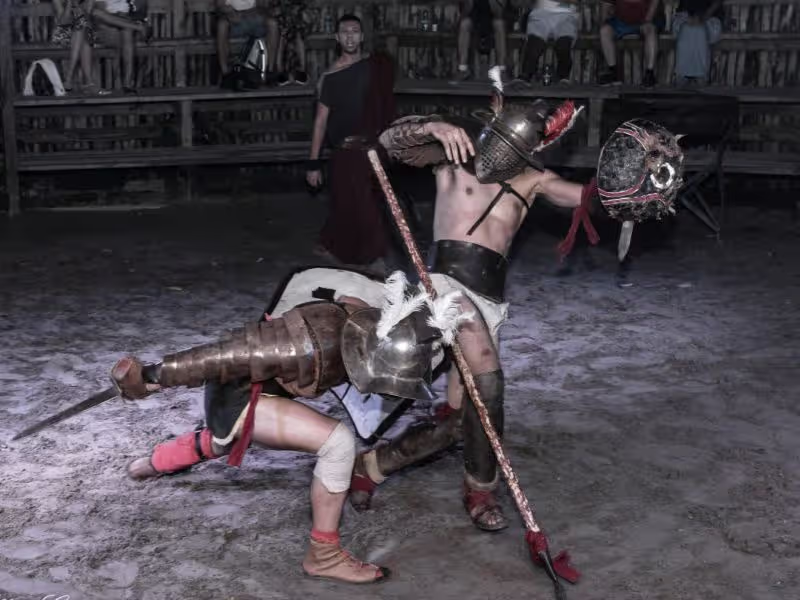
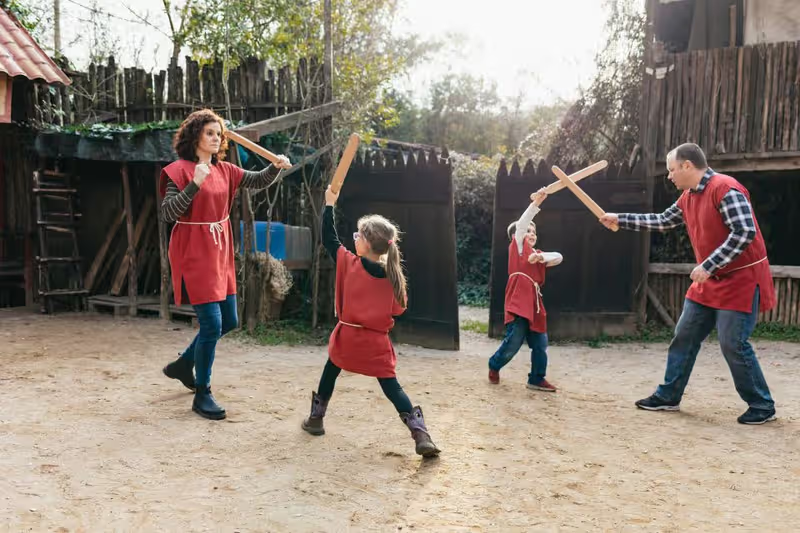
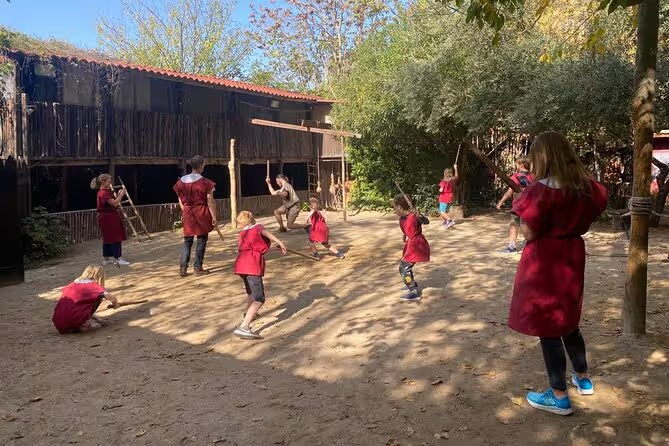
Gladiators underwent intense training to master various combat techniques and to handle different weapons. In the ludus, or gladiator school, life revolved around preparing for the arena. They trained under the watchful eyes of experienced instructors, learning to fight with swords, tridents, and nets. They practiced in armor, becoming accustomed to its weight and restriction, to ensure they could maneuver effectively in battle.

How was the Gladiators' social hierarchy?

The social structure within the gladiator schools was hierarchical. New recruits, known as 'novicii,' began at the bottom of the social ladder. They lived in communal cells and had little personal freedom. Seasoned veterans, or 'veterani,' enjoyed more privileges and had a higher status within the school for their proven prowess and experience in the arena. Often times gladiators played games to maintain morale and camaraderie among them.

What did Gladiators used to eat?

The gladiators' diet was designed to optimize their strength and endurance, consisting mainly of barley, beans, and dried fruits. They consumed a special drink made from ash and water, believed to fortify their bones — a vital necessity in the deadly combats they faced. Recreation and rest were limited, but essential for recovery.

Available Tickets

Rome: 2-Hour Gladiator School
Gladiator school
Rome: 2-Hour Gladiator School
  • Gladiator training and certificate
  • Gladiator Museum ticket
  • Refreshments
★★★★½ 4.7 (460+ reviews) · GetYourGuide
from€120
Book Now
Roman Gladiator School: Learn How to Become a Gladiator
Gladiator school
Roman Gladiator School: Learn How to Become a Gladiator
  • Gladiator training
  • Gladiator Museum ticket
  • Refreshments
★★★★½ 4.5 (1.2k+ reviews) · Viator
from€89
Book Now

Location and architecture

Rome's Gladiator School, positioned just a mile from the iconic Colosseum, offers a historically immersive environment where enthusiasts can go beyond mere sightseeing. Designed to mirror the authentic architecture of ancient gladiator arenas, the space boasts a viewing platform where visitors can appreciate the detailed recreations of the training grounds.

FAQs and tips

How did one become a student at a gladiator school during the Roman Empire?

Individuals were often enrolled in a gladiator school as slaves, prisoners of war, or through self-enrollment for a chance at glory and potential freedom. The schools were highly structured and recruitment varied, with some volunteers seeking fame and fortune.

What sort of training did gladiators undergo in schools?

Training at a gladiator school was rigorous, encompassing physical conditioning, combat techniques, and familiarity with various weapons. Discipline was strict, overseen by experienced trainers called lanistae, to prepare gladiators for the arena's challenges.

Can I participate in gladiator lessons at the Colosseum school?

Today, Rome's Gladiator School offers enthusiasts the opportunity to engage in gladiator-style training, complete with traditional equipment, under the guidance of historical re-enactors.

What was the name for gladiator schools in ancient Rome?

Gladiator schools were referred to as ludi gladiatorii which is the literal translation of gladitor schools in latin. Ludus stands for games, practice or lessons.

Were there women who trained to be gladiators?

Although rare, there are records of some gladiatrix – female gladiators.